

SEO Copywriting vs. Storytelling: How to Rank AND Convert in 2026
Stop choosing between ranking and storytelling. The HeroGuide Hybrid Method pairs a poetic hook for humans with a visible, keyword-rich H1 for Google’s 2026 AI.
Does it ever feel like writing for the web is just one long, constant tug-of-war?
On one side, you have SEO Copywriting. Its job is to make Google happy.
It’s technical, keyword-focused, and designed to get you to Page 1.
On the other side, you have Storytelling (The HeroGuide Framework).
Its job is to make humans happy.
It’s emotional, narrative-driven, and designed to turn a "visitor" into a "customer."
Here is the problem:
If you focus only on SEO, you’ll rank #1... but nobody will buy.
Why?
Because your content reads as if a robot wrote it.
But if you focus only on storytelling, you’ll have a beautiful message that nobody ever finds.
It stays buried on Page 10 of Google.
But wait, there's more.
In 2026, you don't have to choose.
In this guide, I’m going to show you how to use the HeroGuide Hybrid Method to satisfy the bots and the humans at the same time.
Here’s a preview of what you’ll learn:
- Why the "Great Divide" between SEO and storytelling is dead.
- How to use the HeroGuide Framework to turn your customer into the hero.
- The 4-step blueprint to build a "Power Hybrid" strategy that ranks and converts.
Let's dive in.

What is SEO Copywriting in 2026?
Forget everything you knew about keyword stuffing and "word count quotas."
In the past, people thought you needed a massive word count to rank.
That is a myth.
Today, Google cares about User Intent. SEO Copywriting is now about answering a user’s question better and faster than anyone else.
It’s about "Information Gain"—adding something new to the conversation that AI can’t replicate.

What is the HeroGuide Framework?
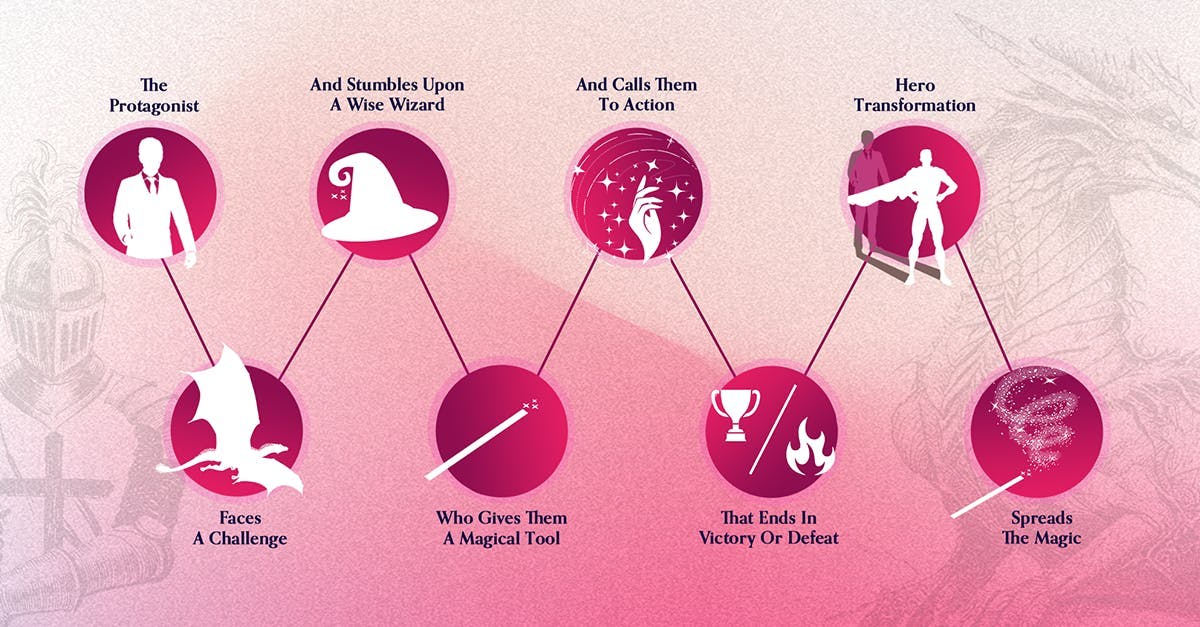
At WITH LOVE INTERNET, we use a specific narrative method called HeroGuide.
It’s based on a simple truth:
Your customer is the Hero. You are the Guide.
Most businesses make the mistake of playing the Hero.
They talk about their history, their awards, and their "mission statement."
The result? The customer gets bored and leaves.
The HeroGuide framework flips the script. It positions your business as the "Magic Solution" to a specific problem the Hero is facing.

The "Great Divide": When to Use Which?
Here is the deal:
Different pages on your website have different jobs.
1. The Search Capturers (SEO Focus)
Your Blog Posts and Educational Guides are your "Pick-up lines."
Their job is to catch someone’s eye in the search results.
On these pages, you want to lead with SEO-friendly headers and data-backed insights to build trust with Google.
2. The Deal Closers (HeroGuide Focus)
Your Homepage and Service Pages are the "Candlelit dinner."
Once someone is on these pages, they are already interested.
You don't need to shout keywords at them.
You need to invite them into a story.
Why does this matter?
According to the State of Marketing Report by Hubspot, customers are 22x more likely to remember a fact when it is wrapped in a story.

How to Build the "Power Hybrid"
So, how do you do both?
How do you rank on Google but still tell a story that sells?
Here is the 3-step blueprint we use:
Step 1: The "Immediate Impact" Hook
Before you worry about SEO, you have to stop the scroll.
Most writers waste the first three paragraphs on fluff.
Don't do that.
Use the APP Formula:
- Agree: Start with a problem the reader knows is true.
- Promise: Tell them exactly how you’re going to fix it.
- Preview: List what they are about to learn.
If you don’t win them in the first 5 seconds, your keywords won’t matter.
Step 2: Keywords as "Plot Points"
Don't "stuff" keywords.
Instead, let them be the milestones in your story.
If you are a guide helping a hero find "High-Speed Hosting," use that phrase as the climax of your narrative.
It feels natural to the reader, and it’s a massive signal to the bots.
Step 3: Quality Over Quantity
In 2021, people thought "more is better."
In 2026, "better is better."
Don't write 2,000 words just to hit a goal.
Write exactly as much as you need to solve the reader's problem.
The Helpful Content Guidelines from Google now reward "concise authority" over "wordy fluff."

The Bottom Line
SEO is the map that brings people to your door.
HeroGuide is the reason they stay.
If you want marketing that actually compounds over time, you need both working together.
We’ve Got Your Back
Still trying to find the balance between ranking and selling?
At WITH LOVE INTERNET, we specialize in the "HeroGuide" implementation.
We don't just build websites and marketing campaigns; we craft narratives that Google loves to recommend and make your customers want to buy.
Stop choosing between traffic and conversions.